For a long time, when people thought about cosmetics manufacturing in China, they often thought about one thing: production.
Make the product. Put it in the box. Ship it overseas.
But China’s beauty industry has changed.
Today, China is not only home to a huge cosmetics manufacturing industry. It is also producing new beauty brands, new product ideas and new ways of bringing products to market.
Look at brands such as SHEGLAM, Florasis, Flower Knows, Judydoll and Joocyee. Different brands, different styles, different strategies — but they all show something important:
China is no longer simply a place where beauty products are made. It is becoming a place where beauty products are developed, tested and launched.
So, if you’re thinking about working with a Chinese cosmetic factory, it’s worth looking at the bigger picture.
China has one of the world’s largest beauty markets, which means local beauty brands have been competing in an extremely fast-moving environment.
Consumers are constantly looking for something new.
A new texture.
A new shade.
A new format.
A new ingredient.
A new way to use an everyday product.
That pressure has pushed many Chinese beauty companies to move quickly.
According to recent industry data, more than 50 Chinese beauty brands have expanded into overseas markets, while Chinese cosmetics exports continued to grow in 2025. Brands such as Florasis and Flower Knows have also entered major international retail channels.
This matters because it changes what China cosmetics manufacturing can offer to an international beauty brand.
It is no longer only about production capacity.
It is also about speed, product development and supply-chain coordination.
You’ve probably seen SHEGLAM online.
The brand is a particularly interesting example because it was built with global consumers in mind from the beginning. Rather than following the traditional model of building a strong domestic brand first and expanding overseas later, SHEGLAM used social commerce, creator culture and an agile product development approach to build an international audience.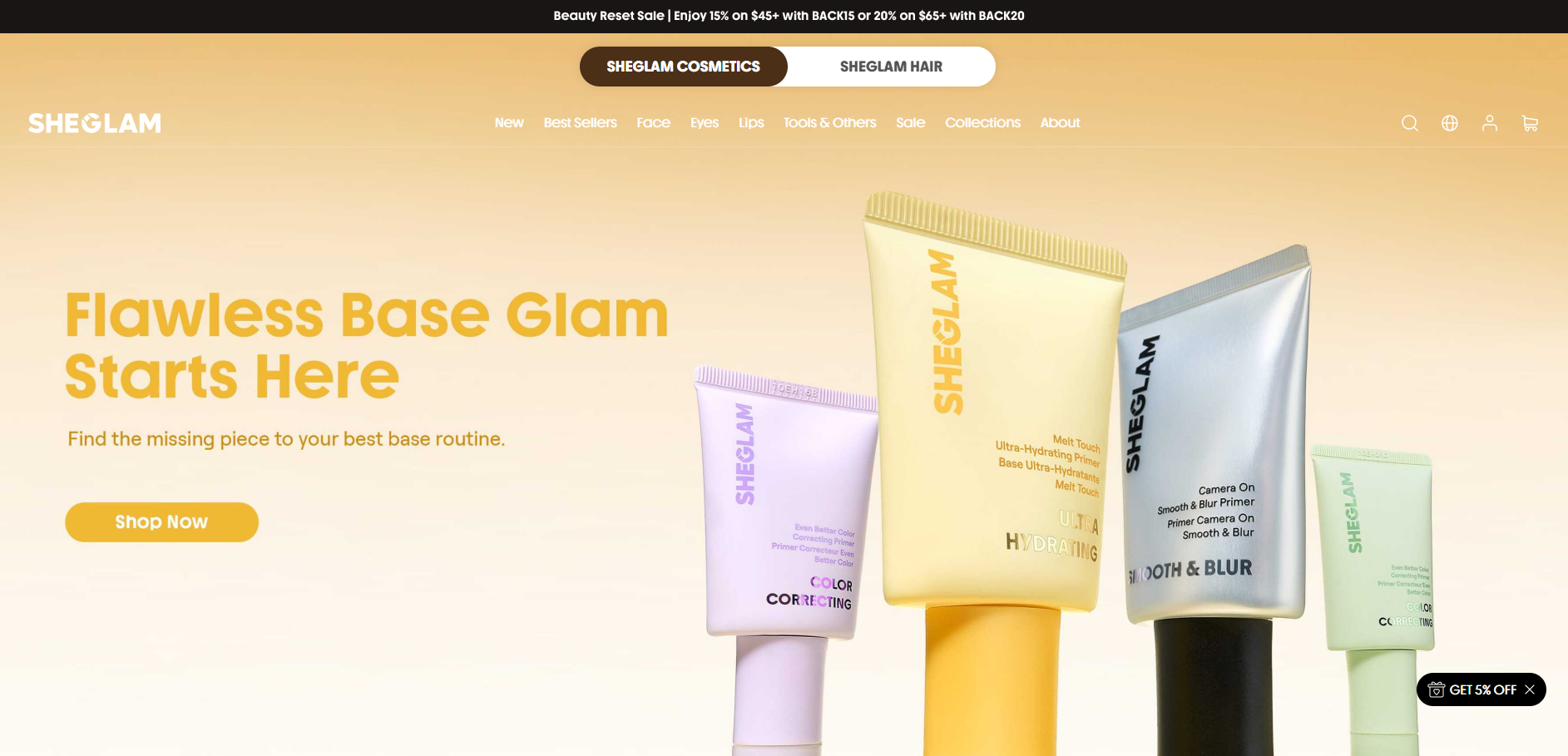
And that tells us something important.
A beauty brand today may see a trend on social media, develop a product around that idea, test it, launch it and learn from customer feedback — all within a much shorter cycle than traditional beauty development.
That requires more than a good marketing team.
It requires a manufacturing system that can keep up.
Beauty trends move quickly.
What people want today may not be what they want six months from now.
For a growing beauty brand, this creates a challenge:
How do you turn an idea into a real product without spending forever getting there?
This is where China’s manufacturing ecosystem can be especially interesting.
China has a deep network of suppliers and manufacturers covering raw materials, formulation, packaging, filling, printing, assembly and logistics.
These different parts of the supply chain can work closely together, making it easier to move from product idea to finished product.
Of course, fast does not mean careless.
A good product still needs proper formulation, testing and quality control.
The real advantage is being able to move efficiently without skipping the important steps.
This is one of the biggest changes in the industry.
Modern Chinese beauty manufacturing is becoming increasingly connected to product development.
Take Florasis as an example.
The brand has invested in its own smart manufacturing facility, using digitalized production systems and automation to improve production efficiency, quality control and responsiveness.
Other Chinese beauty companies are also investing heavily in formulation, research and product innovation.
This reflects a bigger shift:
Manufacturing is becoming part of product development, not simply the final step.
For a beauty brand, that can make a real difference.
Instead of saying:
“Here is my finished formula. Please manufacture it.”
You can work with a manufacturer earlier in the process to discuss texture, performance, ingredients, packaging and production feasibility.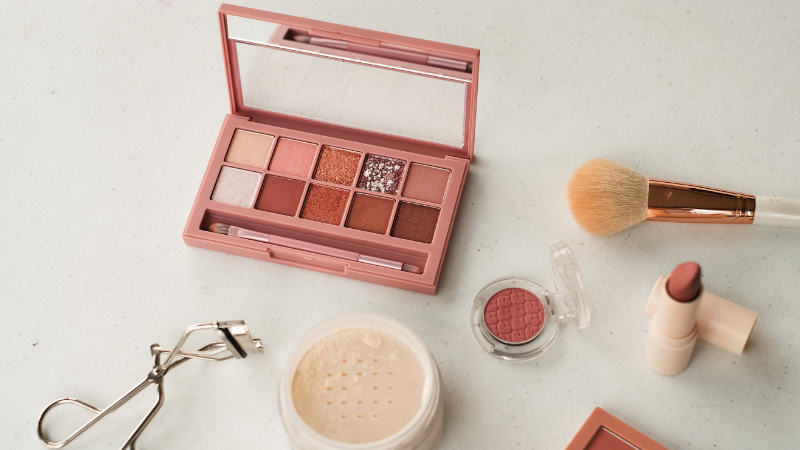
Let’s say you’re building a new makeup brand.
You have an idea for a lip product.
Maybe you want a particular finish that you haven’t seen before.
Or perhaps you have a blush concept inspired by what you’re seeing on TikTok.
You could spend months trying to figure everything out on your own.
Or you could work with a cosmetics manufacturer in China that understands formulation and production and can help you develop the idea into something manufacturable.
That doesn’t mean the factory should decide what your brand should be.
Quite the opposite.
Your brand stays yours.
Your aesthetic.
Your target customer.
Your product idea.
Your packaging.
Your positioning.
The manufacturer’s job is to help make that idea possible.
Price is obviously part of any manufacturing decision.
But if cost were the only reason brands manufactured in China, the story would be much less interesting.
Today, brands are also looking for:
That combination is what makes beauty product manufacturing in China worth looking at.
And it is also why China has become an important manufacturing base for beauty brands around the world.
There is one important thing to remember.
You don’t need to copy SHEGLAM.
You don’t need to build the next Florasis.
And you certainly don’t need to follow every beauty trend you see online.
Your brand needs its own identity.
What you can learn from these brands is something simpler:
Good ideas need the right system behind them.
A strong product concept is only the beginning.
You also need the right formula, the right materials, the right packaging, the right production process and the right people to bring everything together.
That is where the right cosmetics OEM manufacturer can become valuable.
There is no single answer for every brand.
But if you are looking for a manufacturing partner with access to a mature beauty supply chain, product development capabilities and experience across makeup and skincare, China is certainly worth considering.
And the industry is continuing to evolve.
Chinese beauty brands are going global.
Manufacturing is becoming more technology-driven.
Product development is becoming faster.
And the line between brand, product development and manufacturing is becoming much less clear.
For international beauty brands, that creates an opportunity.
Not to copy what Chinese brands are doing.
But to work with the ecosystem that has helped make many of these developments possible.
At JUVYGLOW, we work with beauty brands on OEM, ODM and private label cosmetics manufacturing.
From formula development and product sampling to production, packaging and quality control, we help turn ideas into finished beauty products.
Whether you already have a complete product concept or you're still working out the details, we're happy to have a conversation.
Tell us what you're thinking about.
Your next beauty product could start with an idea. Let's see where it can go.
JUVYGLOW
OEM · ODM · PRIVATE LABEL
Makeup & Beauty Product Manufacturing in China


